
We no longer run the short story competition but when we did we produced an anthology each year. These were the amazing authors and stories we celebrated.
2014 Short Story Winners
1st Prize Still Life - Gregory J Wolos
2nd Prize The Uncarved Block - Melissa Beit
3rd Prize A Hawk in Winter - Lucy E M Black
Shortlist
A Hawk in Winter - Lucy E M Black
Cycles and Batches - Laurence Edmondson
Foxgloves - C G Menon
Lessons - Deborah Boller
Looking for Lucas - Philippa Rees
Still Life - Gregory J Wolos
The Intern - Olwen Greany
The Third Wife - Lynda Green
The Uncarved Block - Melissa Beit
Touches - Joanna Campbell
Longlist
A Hawk in Winter - Lucy E. M. Black
A Piece of Cake - Jude Norton
Al and the Black Bin Bags - Shirley Golden
Ambience - Bruce Harris
Cycles and Batches - Laurence Edmondson
Foxgloves - C. G. Menon
Lessons - Deborah Boller
Looking for Lucas - Philippa Rees
Lost - Nathalie Abi-Ezzi
No Valentines, No Roses - Kate Woodward
Once Upon a Time - Juno Baker
Rooftop Busker - Carol Farrelly
Still Life - Gregory J Wolos
The Climb - Omissi Adrastos
The Intern - Olwen Greany
The Third Wife - Lynda Green
The Man who Sat on Top of the World - Bahar Brunton
Touches - Joanna Campbell
The Uncarved Block - Melissa Beit
Whoops - David James

2013 Short Story Winners
1st Prize
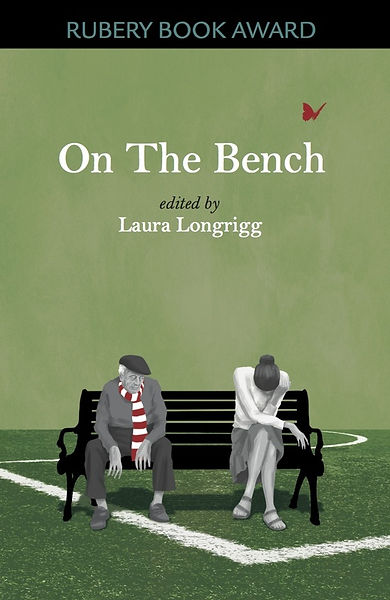
On the Bench
Gill Blow
Tommy is in an old people’s home, but in his mind it’s half time in a football match. He sits on the bench to wait out it out and thinks about his mum and dad. Margaret is already sitting on the beach, she is in shock as her mother has just died in the home. She knows Tommy and is aware of him sitting near her. She is thinking about her mother, about the name of a butterfly she sees nearby and looks into her mother’s handbag. When she starts to cry, Tommy rummages in his pocket and produces some sheets of toilet paper for her to wipe her eyes. The buzzing in his ears tells him the whistle has gone for the second half and he tells Margaret she will have to get off the bench now.
Lovely sense of dislocation in time and place in Tommy’s real and remembered world suffuses this story, compared with the focus of Margaret on her immediate sadness. The interaction between the two, and their reaction to the world around, the heat of the day, the nearby motorbike rider and his girlfriend, all feel in very sharp focus. There’s a tenderness, an understanding, a humour that’s very appealing too.
2nd Prize
Descendence
Jude Norton
Young girl overhears argument in kitchen between her grandmother and man and his daughter. He is accusing grandmother’s son of making his daughter pregnant, she is crying. Grandmother defends her son and humiliates the girl and the pair leave. Her son, Uncle Tommy, joins the girl and hears some of the conversation and laughs with her about it. He confesses he did go with the girl, and many others – as his niece well knows. They talk about why they both feel so unloved by their grandmother, who only cares about her public reputation, and that this propels him to find love with girls. The ending is a punch in the stomach.
The writing is smooth, the description of rural (American) farm home very clear and evocative, the different voices of the protagonists give authentic life to their characters. The story is full of life and colour – with a dark thread running through.
3rd Prize
In Sha'Allah
Margaret Skea
Ayisha is alone on the roof at home as she is no longer able to go to school, by (Afghan) Taliban decree. She is with a devoted dog, her constant companion since she found him badly hurt on the night her pregnant mother was killed in a bomb blast. Her friend walks past on the way to school, he indicates he will see her later to share the school lessons. Her feelings about the Taliban, about her father, about God are bound up in her new situation – at the age of ten she now has to become woman. Her uncle orders her to explode a bomb in the path of some US soldiers. She does so, but does not kill them.
The carnage of war, revenge and religion through the eyes of a child – a very powerful combination only slightly marred by an ending which doesn’t carry quite the impact it could and some grammatical mistakes (ie too many commas).
Short Story Shortlist
On the Bench - Gill Blow
See winners.
The Girl in the Doorway - Jane Cammack
Grandmother with secrets, she welcomes and bonds with her little known grandson who has asbergers. Scare at the end as he falls out of tree, but survives. Slightly convoluted explanation of painting/title gets in way of central relationship which is nicely done.
Grandad's Big Day Out - Joanna Campbell
Young boy at his grandfather’s funeral/ as his baby brother is born. Terrific writing, word play and humour. Could not quite understand why such a perceptive lad hadn’t understood that grandfather was dead.
Letti - Christopher Holt
Incredibly inventive, energetic use of language for a (Australian) tale of rejection of newcomer to a street/community. Descriptions include invented words like gwinnied (verb) and puddle (adjective) as the new neighbour is hounded out. A bit short and exhausting.
The Truth and the Beauty of the Supporting Role - Cath Humphris
Woman is forced into disguise and hiding, accompanied by secret service officer. Is it real or an ‘acting’ part as the title suggests? I couldn’t quite work it out, which spoiled an otherwise intriguing idea.
Descendence - Jude Norton
See winners.
The Spit and Swear Promise - Ceri Lowe-Petraske
Nice title, parents pretend to be best mates with their recently dead neighbour in order to clear her house. I liked the ‘homespun’ tone with deceptive double meaning especially in Pa’s responses to police, but I wasn’t sure the ending quite worked.
In Sha'Allah - Margaret Skea
See winners.
Get out of Here - Lytton Smith
This has a very authentic young narrator’s voice, who is embarrassed by her father’s strange antics in burying electrical goods in the garden. Good use of language, heightening the emotional impact but the action is a bit jumpy and hard to follow at times.
Freefall - Eve Vamvas
Irish Father Brian stops people committing suicide and one of his ‘clients’ becomes a regular visitor. Good sense of tension, and skilful characterisation of the two men – will Frank finally do it or not – and Brian himself feeling put upon – I couldn’t tell if the ending was of the visits or Frank himself.
1st Prize
Peacock Girl
Melanie Whipman
2nd Prize
By the Light of the Moon
Eve Vamvas
3rd Prize
The End of Hope
Andrea Stephenson

Shortlist
FIRST DAY – Gail Anderson
It is never explained why the white female protagonist spends her days doing odd jobs for a poor black school in South Africa, yet her humanity and kindness shine through. She befriends two boys who follow her around, sit on the roof, hammer and paint with her. The main action of the story centres on a dove whose foot is caught in the seed pod of a eucalyptus tree. When a young man with a gun appears, everyone expects him to shoot the bird, but instead he frees it. The innocent reactions of the children and the protective worrying of their teachers are beautifully portrayed and the debate around the intentions of the man with the gun is entirely convincing. It is only at the end of the story and the news that the ANC has been unbanned that the reader realises the full significance of the freeing of the dove. It is a well thought out and exact metaphor.
BLUE FLOWER – Sarah Evans
This is a clever story that is seen through the eyes of a young boy. His mother has died and his father has left him and his younger sister in the care of an elderly aunt. They are in Italy, prior to the Second World War and their nanny introduces them to the glory of Mussolini, showering flower petals on the troops returning from Abyssinia. With the nanny dismissed in disgrace and the aunt refusing to have them any more, they are sent home to England and a new stepmother. The boy’s clearsighted viewpoint of what he sees, brought to life through his keen awareness of colour, contrasts with his ignorance of the significance of the events around him and brings a poignancy to the situation as the reader understands so much more than he does.
MARIA’S SILENCE – Carly Holmes
Maria, who was found dead on the beach, appears on the back of the stone horse in the public square. Family and friends are at first delighted, then dismayed when she refuses to speak to them and any attempt at contact passes through the air as if she is not there at all. Villagers bring offerings, then fight over the food; they scold her for not picking up the new shoes she had ordered; her mother and best friend sit quietly and wait for her to give them some sign. The delight of this story is the rich, playful language. Sparkling descriptions and affectionate portraits of the villagers, despite their selfish behaviour, bring credibility to a surreal situation. Humour and pathos dance side by side until the ending when they discover that Maria has returned with a plea for silence.
VINYL – William Kelly
It is important to register the name of, Alex, a main character in this story. It comes at the beginning and is repeated later in an amended form. We sympathise with this man initially, with his delight at the delivery of Saint Saens’ Symphony No 3 and the memories of his first lover in South Africa when he was a young policeman. When Robert appears, it is not immediately obvious how they are connected. His close friend, a young, educated black man, was tortured and thrown out of the window of the police station, supposedly a suicide. When he went to the police station, he was treated with contempt by the policeman in charge. This is a story of revenge, told in beautiful language, full of originality that brings to life the world of young black intellectuals in the 1980s, gathering together to make plays, films, music and write. The revenge comes from an unexpected source, an imaginative use of an old vinyl record, memories and the power of sound.
WE’RE GOING TO LEAVE YOU NOW – Anita Punton
Set in the colony of Victoria, some time in the past, this story brings to the reader all the sights, sounds and smells of a rough, emerging society, with the trappings of civilisation, but still hovering between luxury and filth. The main character is Doctor Brister, a larger than life man who apparently has the skills of a doctor, but does not see the necessity of attending a childbirth because he knows that the woman will die, and his young assistant, Bert, who is the observer of the story. When the doctor’s dog dies, he becomes unexpectedly maudlin and insists on a photograph next to his faithful dog at a studio, which results in chaos and misunderstanding. There is much humour here and the details are tossed out with convincing and delicious ease. The characterisation is remarkable, especially acute as it is all conveyed through the clear and honest eyes of Bert. There is much here to enjoy.
THE WAVE - Paddy Ricard
This is a story about childhood insecurities and their power to reassert themselves later in life. The protagonist enjoys an apparently successful life with a beautiful wife, a good job and plenty of money, and yet the arrival in London of Sergey, a famous concert pianist, sends him straight back to the eczema of his childhood. At the age of ten, when Sergey came to his school for three months, they were both outsiders. The protagonist was nervous and unpopular with his contemporaries but when they meet now, Sergey doesn’t recognise him. The skill in the storytelling is in the way in which the lesson learnt by the protagonist when he was at school with Sergey is re-enacted in the present day and makes a significant point. It’s a powerful portrait of a child with genius and introduces a clever, new perception with a twist at the end.
TURNIP SOUP – Lindsay Stanberry-Flynn
Elizabeth and her husband have lost their two-year-old daughter and she and her husband have reacted to the tragedy in radically different ways. She cannot move on – she is offended by the suggestion – and she becomes less and less functional. He tries to bring back normality, spending long hours in the garden, planning a holiday to the Caribbean even though she refuses to go. The skill here is in the balance between the two characters and the gradual realisation that the husband, who appears to be the more rational of the two, is perhaps reflecting the same emotional frugality displayed by his mother. He is determinedly normal, which drives Elizabeth to more extreme behaviour. The turnip soup of the title is a recipe left by his mother, with a mysterious reference to a secret ingredient. Elizabeth prepares the soup, but creates her own version. Was this what her mother-in-law intended?
THE END OF HOPE – Andrea Stephenson
Hope is the last polar bear on earth, who has been brought to an English zoo to live out her last years. The world has been immeasurably altered by the climate changes and most people have retreated to small flats in blocks on stilts, high up in the hills. The protagonist is not someone who conforms. She remains in her house near the river bed and takes her chances with the floods when they come every year, never certain that she will survive. A visit from an old friend, possibly lover, vindicates her decision to stay, as she is told how mankind are losing their ability to communicate. The futuristic world is fascinating and convincing without being too far removed from our present existence, and the contrast between then and now is described with sorrowful beauty. The bleak ending that the reader expects after the death of the polar bear is tempered by the possibility that all might not be lost after all.
BY THE LIGHT OF THE MOON – Eve Vamvas
Born on the same night that Neil Armstrong set foot on the moon, Claire is one of a group of doctors working in an unknown refugee camp on the edge of a desert where the poor and starving and ill have gathered. They keep coming even after the medical supplies have all but run out. It is superbly convincing and the despair is portrayed unflinchingly against the painfully beautiful descriptions of the moon, which filters in and out of the story like a leitmotif. Amazingly, against the backdrop of hopelessness, the story manages to end with an unexpected indication that there is still a future in the midst of all this terrible misery.
PEACOCK GIRL – Melanie Whipman
This appears to be a remarkable insight into the world of female boxing, told by the mother of a boxer known as Our Peacock, but it’s really a story about love. We are drawn into the mother’s world, as she is compelled to be part of her girl’s world. There is a deep understanding of the quiet resigned love of a mother who knows that she can’t protest too much if she wants to remain in her daughter’s life. So her girl goes with her father to a match against the Wasp, while her mother stays at home and cooks, hunting out food and vitamins that aid healing, while she waits for black eyes, split lips, fractured ribs and everything else that results from boxing. It’s a very moving story and it is with real pleasure that the reader comes to realise that the mother’s selfless love pays off and her independent, tomboyish daughter demonstrates her love in return.
2012 Short Story Longlist
FIRST DAY – Gail Anderson
A white woman gives practical help to a poor black school in rural South Africa. They watch the freeing of a trapped dove, only later discovering that momentous changes are happening in the country.
SERIFAT – Princess Ayelotan
A man is furious that his wife has given birth to a third daughter instead of a son, while she is delighted that the baby resembles her sister who has recently died.
INTO THE DARK – Pauline Burgess
Neighbours help a man hunt for his missing child during the night in an inhospitable, mountainous region, but they know more about his wife and marriage than they are prepared to say.
BRAIN BOOSTERS - David Chesters
A touching story of a wife’s struggle to deal with her husband’s Alzheimer’s as she misses their close physical relationship.
BLUE FLOWER – Sarah Evans
Set in Italy and told from a child’s point of view. The rise of Mussolini becomes confused with the trauma of absent parents.
MARIA’S SILENCE – Carly Holmes
A young woman who has committed suicide comes back as a ghost and sits on a statue in the town square, confusing everyone and causing chaos amongst her family and friends.
VINYL – William Kelly
The friend of a young man killed by the police in South Africa finds a unique way to exact revenge on the policeman responsible.
LIFELIKE – Barbara Leahy
When a taxidermist dies, his wife cares for his sick sister and makes plans to memorialise him.
SCOTCH AND SUNDAYS – Ceri Lowe-Petraske
This explores the long term effects of guilt on a man who is still affected by events from his childhood, when he was responsible for a terrible accident.
THE HAMPTONS – Christopher Owen
A hilarious account of a dysfunctional family, almost entirely conveyed through realistic dialogue, which becomes more surreal as it progresses.
WE’RE GOING TO LEAVE YOU NOW – Anita Punton
Set in Victoria, Australia, in the early days of settlement. An irritable and unpredictable doctor plans a photograph with his dog who has unexpectedly died.
THE WAVE – Paddy Ricard
When a man meets famous concert pianist who he knew briefly at school, he becomes the recipient of a strategy that they discussed as a child.
TOMORROW – Lisa Sedwick
A wife who left her husband returns when she discovers he is seriously ill and re-examines her relationship with him.
TURNIP SOUP – Lindsay Stanberry-Flynn
The painful relationship between a man and his wife after losing their baby, and their inability to forget or to separate from each other.
THE END OF HOPE – Andrea Stephenson
A story set in a bleak future where summer droughts and winter floods have changed the way people live, and the last polar bear, Hope, represents the future hopes of mankind.
BY THE LIGHT OF THE MOON – Eve Vamvas
An Aid worker in Africa, confronted by the hopelessness of more and more refugees as supplies run out, finds comfort in an unexpected place.
WHILE I WAS IRONING – Alison Wassell
A woman thinks her son as she irons, a typically arrogant, thoughtless young man who then dies in a tragic accident.
PEACOCK GIRL – Melanie Whipman
A story about a girl boxer, told from the point of view of her mother, who knows she has to remain restrained and uncritical if she is to maintain her relationship with her daughter
DOWNPOUR – Sally Xerri-Brooks
A severely disabled girl has a new carer who, despite her lack of experience, treats her with an unexpected understanding.
2012 Short Story Winners
2012 Short Story Winners
2011 Short Story Winners
FIRST PRIZE
The Tipping Point - Sarah Evans
A deceptively simple story about a couple on a mini-break in Dubai. Mark and Alex haven’t been together long, and he’s beginning to feel that she isn’t the woman he’d hoped she was. At first it appears to be a simple clash between Mark’s apathy and Alex’s spirit of adventure, but it becomes clear that the latter is meant to signify more than mere youthful thrill-seeking. Alex is a war correspondent who’s been working in the Middle East, covering the conflicts that have blighted the region. We come to feel that – despite the worthy nature of her job - there is something lacking in her: not only is she demanding and selfish, but she can’t form relationships, and we wonder if she is fully engaged in the world. When she talks of her job we’re told that she speaks without really saying anything, either that or she distorts reality, “glossing over the messy horror to offer amusing anecdotes.” In this way the story forces us to reflect on Alex as a character type, the nature of her vocation, and the extent to which they might be linked. Can the glamorous, self-interested thrill-seeker ever produce anything other than self-serving narratives? This is an original, thought provoking piece which offers an unsettling comment on a particular kind of storyteller and, in turn, on the validity of the narratives they produce.

SECOND PRIZE
After the Rain - Cath Humprhis
A powerful story about a couple marooned during a flood. The tone is initially humorous, but this darkens as the gravity of their situation becomes apparent. Gary (sometimes Garry?) and Cass haven’t been together long, and the disaster throws their differences into relief - he wants to abandon the house, but she wants to stay. The flood gives way to other crises, and the story takes on an apocalyptic feel as the water continues to rise and the prospect of help appears increasingly unlikely. At first people strive to assist one another, and it seems as if the communal, “Dunkirk” spirit will win the day, but as the flood fails to subside, altruism is in short supply – opportunists begin charging for boat rides to safety, and there’s talk of looters and riots on dry land. What I enjoyed particularly is the effective way in which the pessimism is offset by the ending – the closing image of the couple huddled together in bed is strangely comforting; though their differences remain, the image reminds us of the solace to be found via human interaction, and perhaps by extension in the communal spirit that the flood threatens to undermine. A very well-handled story, apposite to our times.
THIRD PRIZE
Embracing Change - David Chesters
A humorous story about attitudes to change: those who embrace it, and those who resist it. The protagonist belongs in the latter category, his wife in the former. While the husband laments the lost stability of regular employment - bringing “cleaning and janitorial services to every sector of the business community” – his wife strives to find herself, seeking stimulation through art and experimental sex. When she inadvertently knocks her husband off Shoreham harbour wall after reading a lukewarm review of her latest creative fad, it creates a lovely comic image that effectively frames the story. His backward tumble into the sea fittingly conveys his haplessness, and her selfish disregard for others, but ultimately it’s difficult to establish who is to blame for the couple’s current disharmony. In a way the story dramatizes the conflict at the heart of the human condition, where the need for reassuring structure so often competes with a desire to abandon its shackles. A sharp, engaging domestic satire.
Shortlist
What Could It Be? - David Chesters
A woman working on an art project reflects on her past life with her safe, dull husband. Following his death – for which she seems partly responsible – she is free to pursue her artistic endeavours. But will this constitute another failure in her life, another example of unrealised potential? The fact that her art project won’t be finished in time for the show seems to suggest so. This is a well-paced, subtle story that is convincing throughout.
This Concerns No One - Christian Cook
A story of two men who meet on a jetty: one has made a mess of his life, but wants to return to the world and make a fresh start; the other wants to commit suicide because his reputation is ruined. An offer to swap identities turns into murder in this haunting, morally complex tale which forces us to reflect on life and its value.
On Ice - Rachael Dunlop
This is a neat story about a woman hoping to leave the country with her lover, and her lover’s mistresses’ money. It has a pleasing twist in the tale, the anticipation of which manages to generate and sustain narrative tension wonderfully.
An Old Boy and a Young Man from Enns - Martin Cathcart Froden
An understated piece in which two patients recuperating in hospital form a bond; the relationship between and youngster and an old man has a transforming effect, even though only one of them fully recovers; the “secret language” they learn to speak transcends the generational divide and offers comfort for them both. A poignant, uplifting tale.
At the Border - T. D. Griggs
A story about cynicism versus idealism. Here a group of border guards in Nigeria don’t realise that they’re being treated with respect by an old couple who refuse to bribe them in order to facilitate their passage. This very clever piece makes a cogent point about what it apparently means to be civilised; at the same time, it doesn’t let us forget that one person’s idea of respect isn’t necessarily everyone’s, and that so-called civilised values don’t always travel well!
The Winter Visit - Mary O'Shea
A heart-breaking story about a man with Alzheimer’s who, after the death of his wife, fears the threat of degeneration and, particularly, isolation. He visits his older brother in an attempt to make a connection, but can’t establish one. Partly this stems from the fact that he finds it difficult to articulate exactly what he requires, and as he drives home into the night we feel the force of the darkness he is about to enter. The nightmare of his impending disintegration is a terrifying one indeed, and this is conveyed powerfully in the final image. It is a sophisticated and emotionally charged piece that was a very close contender for a spot in the top three.
Duchess - Eve Vamvas
A female doctor tends to a woman who has a history of being mistreated by her husband, and who seems to conform to certain expectations about the type of people who endure relationships of this kind; such expectations are effectively undermined, however, we learn that the doctor herself is the victim of similar abuse. This is a tightly written, troubling story which offers a corrective to popular assumptions and stereotypes.
Longlisted stories
A Nurse's Confession - Melanie Amri
The Heroism of Ahmet Efendi - Winifred Conway
The Killing o' Mr Finchan - Lynn Florkiewicz
In Space, no-one can Hear you Sing... - Frances Gow
Who Dunnits - L. F. Roth
The Problem with the Tub - Mike Berlin
The Rolling Sea - Elizabeth Dye
The Rant of the Skywalker - Clare Girvan
The Question - Jo Ling
In the Glass - Philip Taylor